
The foster care system has a long history of racial disparity. Miami’s system is no exception.

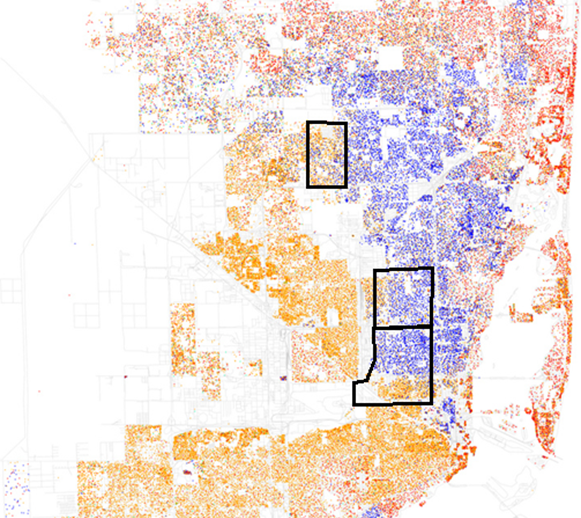
The three zip codes in Miami where DCF removes the most children are historically Black neighborhoods.
They are Allapattah, Brownsville, and Miami Gardens.
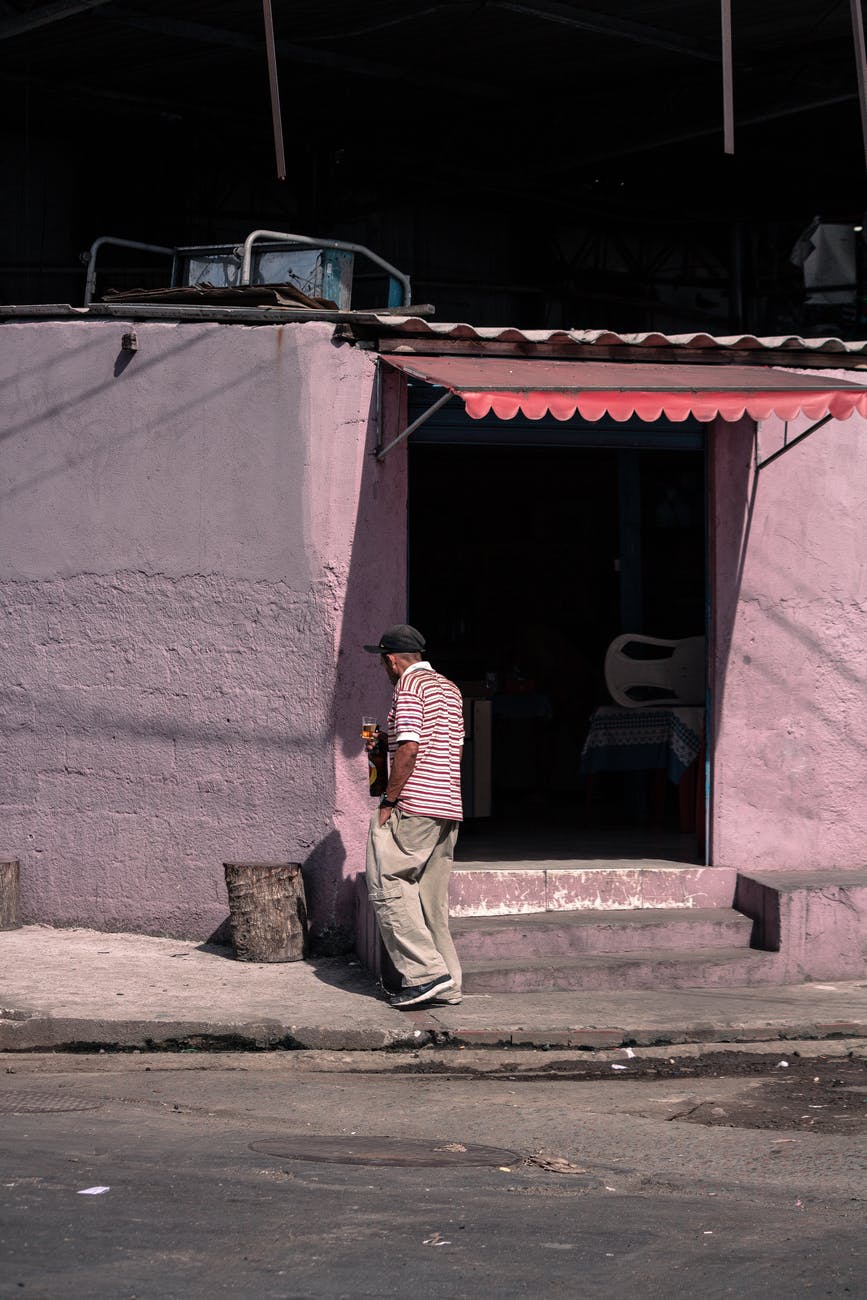
DCF disproportionately removes Black and mixed-race children in Miami for poverty-related and situational neglect.
Black and other non-white children were over 6 times as likely to be removed for medical neglect, 2.5 times as likely to be removed for abandonment, and nearly twice as likely to be removed for inadequate supervision or housing issues.
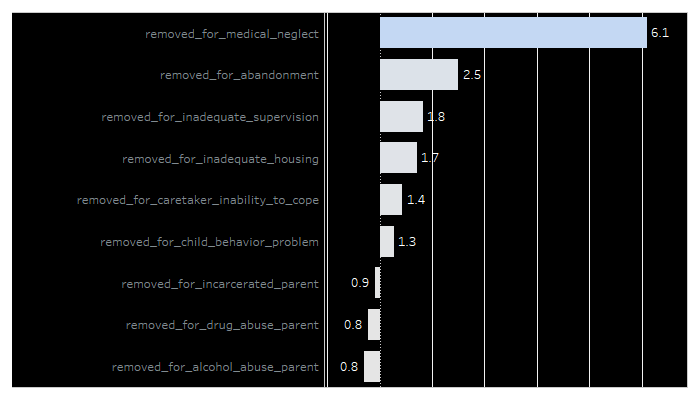
Data source: DCF Public FSFN Data (July 2020)

Once in foster care, Black children in Miami have significantly worse experiences compared to other children.
- 1.7 times as likely to ever be placed in a correctional facility
- 1.3 times as likely to ever run away
- 1.2 times as likely to ever be placed in a group home
- 0.7 times as likely (less) to be reunified within 3 years
- 0.8 times as likely (less) to exit care within 3 years
- 0.8 times as likely (less) to be adopted within 3 years

As a result, Black children in Miami are 4.4 times as likely to be in foster care as children of other races.
Black children are 23% of Miami’s child population, yet make up 54% of its foster care system. Miami is one of only four local systems in the state that is majority Black.
Family Equity: Miami seeks to end policies and practices that result in high rates of Black children entering and staying in the foster care system.
Reduce the number of Black children unnecessarily investigated and removed from their homes.
Increase the rate of reunification and family custody among Black families.
Halt harmful placement patterns and increase access to therapeutic and mental health services for Black youth.

Family Equity: Miami seeks to create communities where families have all of the economic and social supports needed for children to remain with family and thrive.
Work across other family serving systems like education and juvenile justice that intersect to produce inequitable outcomes.
Join with people impacted by the foster care system to help build power to transform communities.
Refer families to effective prevention services when DCF gets involved.
Ensure safe and affordable housing, quality and affordable child care, job opportunities, access to health care including behavioral health services, and other necessary supports.
Join us and learn more about the work.
Family Equity: Miami
Further Resources
 Family Equity Miami